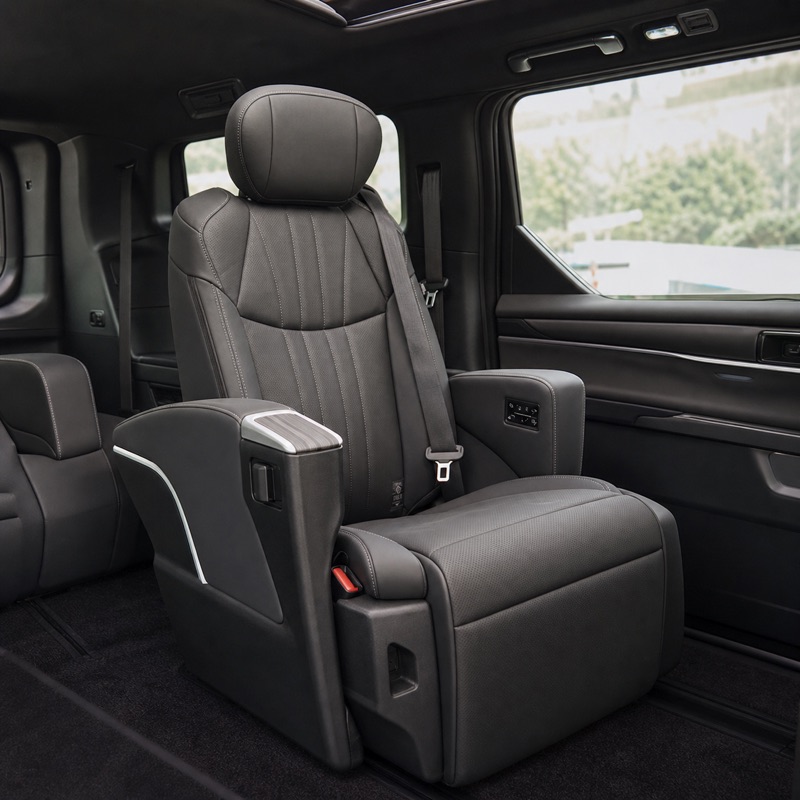
For business vans, MPVs, VIP transportation vehicles, and executive vehicles, upgrading the Car Seats is not simply about changing the appearance. A professional seat upgrade should combine comfort, materials, functionality, design, and safety. Here are five key factors to consider when planning a business vehicle seat upgrade.
1. Comfort: The Core of Business Vehicle Seat Upgrades
Business vehicles are commonly used for corporate transportation, airport transfers, VIP reception, and long-distance travel. Passengers may spend much more time in the vehicle than during a typical short trip.
Therefore, seat comfort should not simply be judged by whether the seat feels soft. Important factors include:
Cushion thickness
Backrest support
Lumbar support
Thigh support
Cushion length
Reclining angle
Pressure distribution
A well-designed business seat should provide balanced support while maintaining a comfortable sitting experience during extended journeys.
Practical Tip
If the vehicle is mainly used for long-distance business transportation, prioritize lumbar support, appropriate cushion length, backrest adjustment, and thigh support instead of simply making the seat softer.
2. Materials: Balancing Comfort, Appearance, and Durability
Seat materials are one of the most noticeable parts of a business vehicle interior upgrade.
Depending on the vehicle's positioning and budget, different materials can be selected, including:
Genuine Leather
Automotive Synthetic Leather
Microfiber Leather
Perforated Leather
Premium Automotive Leather
For business vehicles with frequent daily use, material selection should not be based only on color and price. Important factors include wear resistance, stain resistance, softness, cleanability, durability, and long-term appearance.
Practical Tip
For business and VIP vehicles, especially when investing in Custom Nappa Leather Captain Seats, choose automotive-grade leather based on durability, easy maintenance, comfort, and long-term performance, rather than appearance alone.
3. Functions: Turning a Standard Seat into a Business-Class Seat
Modern business vehicle seats can offer much more than basic seating.
Depending on the vehicle and available interior space, various comfort functions can be added:
Power Adjustment
Seat Heating
Seat Ventilation
Lumbar Support
Leg Rest
Reclining Function
Massage Function
However, more features do not always mean a better solution.
For example, an airport transfer vehicle may benefit more from comfortable seating, leg support, reclining functions, and easy-to-clean materials.
For an executive vehicle used for corporate reception, premium leather, custom stitching, and embroidered logos may be more important for creating a professional and personalized interior.
Practical Tip
Choose seat functions according to the vehicle's actual purpose instead of simply adding every available feature.
4. Design: Premium Appearance Comes from the Details
The premium appearance of a business vehicle seat comes not only from the leather itself, but also from the overall design and finishing details.
Popular customization options include:
Custom Colors
Contrast Stitching
Diamond Stitching
Perforated Patterns
Embossed Logos
Custom Embroidery
For example:
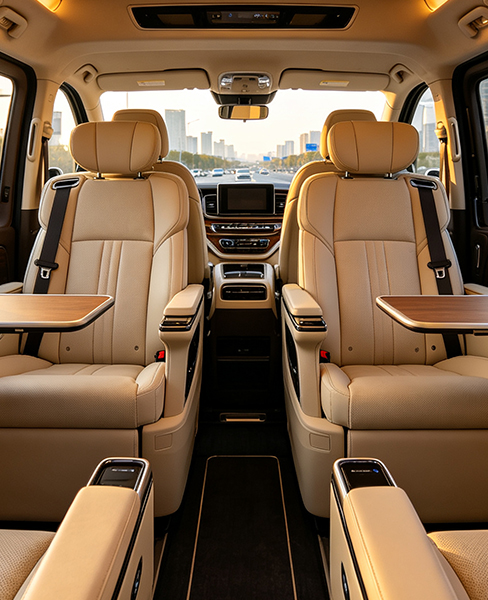
Black + Beige
Creates a clean and elegant executive atmosphere.
Black + Burgundy
Creates a more distinctive and luxurious interior style.
Dark Brown + Cream
Creates a warm and premium business environment.
The overall effect can be further enhanced by matching the seats with the door panels, floor mats, dashboard, roof, and ambient lighting.
A consistent design language helps create a more refined and professional interior.
5. Safety: Never Compromise the Original Safety System
Safety is one of the most important considerations in any business vehicle seat upgrade.
Some vehicles are equipped with side airbags inside the front seatbacks. Therefore, when replacing seat leather, reupholstering seats, or customizing seat covers, special attention should be paid to the airbag deployment area and original seat structure.
A professional seat upgrade should take into consideration:
Airbag Deployment Area
Airbag-Compatible Seam Construction
Original Seat Structure
Seatbelt System
Electrical Components
Heating and Ventilation Systems
Practical Tip
Before modifying, reupholstering, or upgrading to Multi-Electric Adjust Replacement Seats, always check the original seat structure and relevant manufacturer requirements, especially when the seat is equipped with side airbags.
Conclusion
Business vehicle seat upgrading is not simply about replacing the original leather.
A complete and professional solution should consider:
Comfort + Materials + Functions + Design + Safety
For business vans, MPVs, VIP transportation vehicles, and premium customized vehicles, the seats are often the part of the interior that passengers interact with most directly.
A well-designed business vehicle seat can therefore improve the passenger experience while also becoming the centerpiece of a complete automotive interior upgrade.
The goal is not simply to make the seat look more luxurious. The goal is to create a more comfortable, functional, durable, safe, and personalized business travel experience.
After years of use, one of the most noticeable changes in a vehicle often happens inside the cabin rather than under the hood.
Seat surfaces can become worn, leather may crack or fade, door panels can age, steering wheels may lose their original finish, and dashboards can develop visible marks.
As a result, more vehicle owners are exploring full-car leather interior upgrades and customization as a way to refresh their vehicles without replacing them.
A professional interior upgrade is not simply about replacing seat covers. It can involve redesigning multiple areas of the cabin according to the vehicle structure, original interior style, and customer preferences.
1. Why Does Automotive Interior Leather Age?
Automotive interiors are exposed to frequent contact and changing environmental conditions.
Common issues include:
Surface wear: Frequent entry, exit, and daily use can gradually wear seat surfaces.
Leather cracking: Friction, temperature changes, and long-term use can affect leather surfaces.
Color fading: Sun exposure and continuous use can cause changes in interior color.
Local damage: Steering wheels, armrests, and seat edges are particularly exposed to frequent contact.
Outdated design: Even when the original leather is still usable, the original color or style may no longer match the owner's preferences.
These factors have contributed to the growing interest in interior leather upgrades.
2. A Full Interior Upgrade Is More Than Replacing Seat Leather
A complete interior customization project can cover multiple areas.
① Car Seats
Seats are usually the central part of an interior upgrade.
Customers can customize:
Seat upholstery
Side bolsters
Headrests
Seatbacks
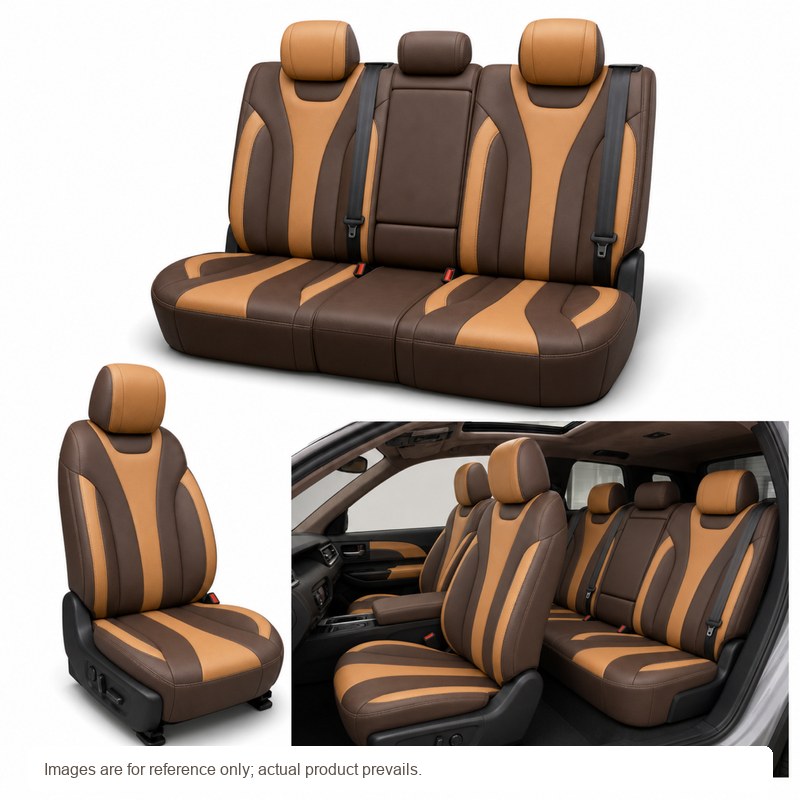
Two-tone designs
Customized stitching
② Door Panels
Door panels help connect the visual design of the seats, dashboard, and other cabin areas.
Leather or automotive synthetic leather can be used to create a more consistent interior appearance.
③ Dashboard and Center Console
For customers looking for a more premium appearance, dashboards and center consoles can also become part of the customization plan.
Material, color, and stitching can be coordinated with the seats and door panels.
④ Steering Wheel
The steering wheel is one of the most frequently touched components in the cabin.
It can be upgraded with suitable automotive leather or other interior materials, together with customized colors, perforation patterns, and stitching.
⑤ Armrests and Detail Areas
Armrests, storage areas, and other smaller components may seem less important individually, but they can have a noticeable effect on the overall appearance.
A professional full-car customization plan takes these details into consideration.
3. Material Selection: A Key Factor in Interior Upgrading
Automotive interior leather is available in different grades and material options.
Economy Solutions
Suitable for customers who prioritize affordability and practicality.
The focus is generally on:
Basic durability
Daily usability
Cost efficiency
Common colors and textures
Mid-Range Solutions
Designed for customers looking for a balance between quality, appearance, and price.
Key considerations include:
Soft touch
Surface texture
Wear resistance
Color performance
Long-term usability
Premium Customization
Suitable for premium vehicles, business vehicles, and customers seeking highly personalized interiors.
Greater attention can be given to:
Material texture
Refined stitching
Two-tone combinations
Customized patterns
Overall visual consistency
Personalized details
There is therefore no single interior solution for every customer. Different material grades can be matched to different requirements.
4. Why Are Two-Tone Designs and Custom Stitching Becoming Popular?
Traditional single-color interiors remain popular, but more customers are looking for personalized combinations.
Popular combinations can include:
Black + Red
Black + Beige
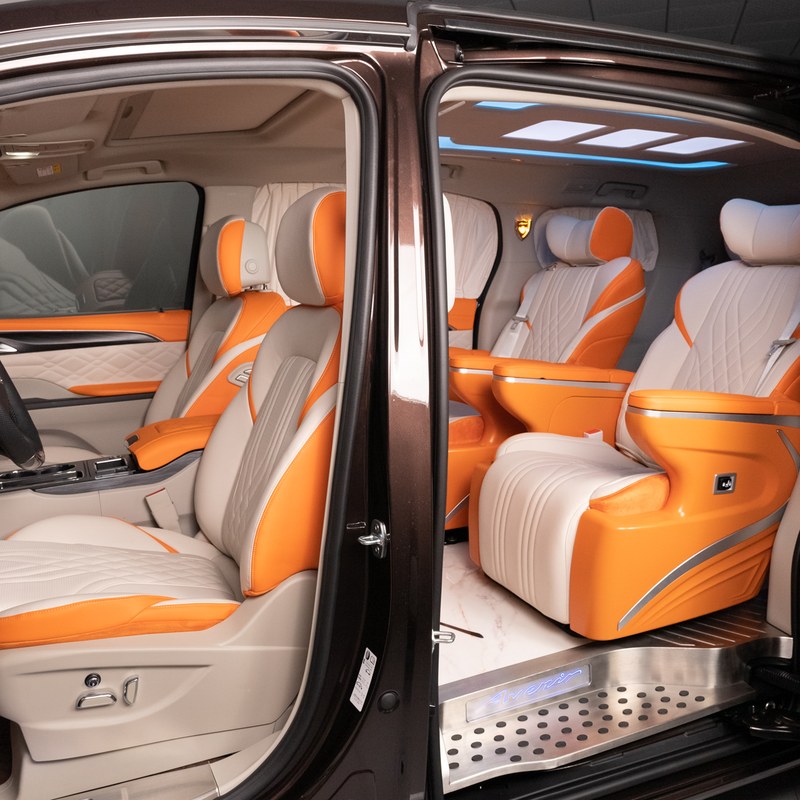
Black + Orange
Dark Gray + Black
Brown + Black
Stitching can also be used to highlight seat contours and design details.
For example, black leather with red stitching can create a more sporty appearance.
Meanwhile, beige leather with dark brown details can create a warmer and more sophisticated visual effect.
5. Airbag-Compatible Construction Is Also Important
Interior customization should not focus on appearance alone.
For seats equipped with side airbags, the upholstery structure around the airbag area requires special consideration.
Professional seat upholstery can incorporate airbag-compatible weak-seam construction in designated areas according to the vehicle structure and upholstery requirements.
Important considerations include:
Airbag location
Original seat structure
Stitching position
Weak-seam construction
Leather panel design
The goal is to combine a refreshed appearance with appropriate consideration of the vehicle's original functional design.
6. Who Can Benefit From a Full-Car Interior Upgrade?
Full-car leather upgrades are not limited to luxury vehicles.
They can be suitable for:
① Everyday Vehicle Owners
Owners can refresh an aging cabin while continuing to use a mechanically reliable vehicle.
② Used-Car Owners
Interior refurbishment can improve the overall visual condition of a vehicle.
③ Automotive Detailing and Modification Shops
Interior customization can provide additional services for customers.
④ Automotive Dealers
Customized interiors can help create differentiated vehicle packages.
⑤ Business Vehicle Owners
More refined interior designs can create a professional and comfortable cabin environment.
⑥ Automotive Enthusiasts
Owners can create a cabin based on their preferred colors, materials, and design concepts.
Conclusion
A vehicle can stay with its owner for many years, while the interior is experienced every day.
When the original vehicle still meets the owner's driving needs, a professional full-car interior leather upgrade can introduce new materials, colors, stitching, and design details to create a completely refreshed cabin.
The future of automotive interiors may not simply be about replacing old materials—it may be about creating a space that is truly customized for the person behind the wheel.
Upgrade Your MPV: The Ultimate Guide to Custom Aviation-Style Seats
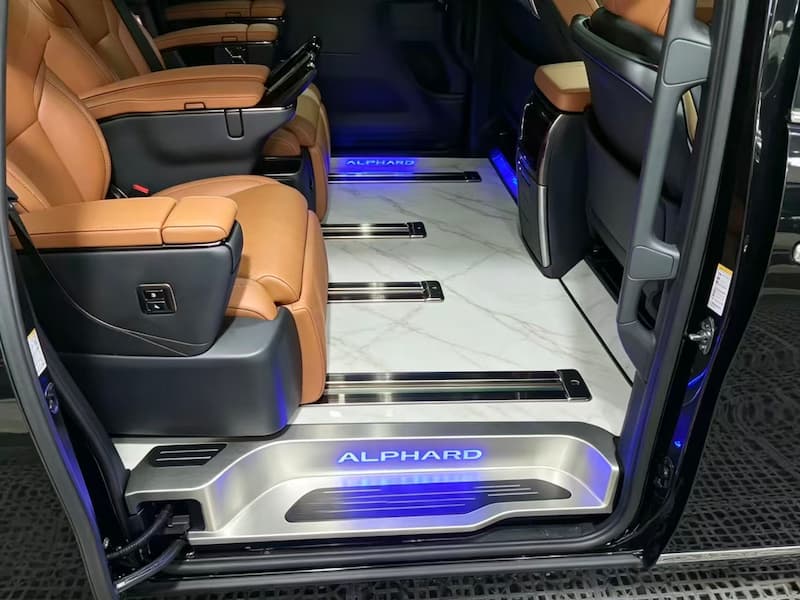
For business owners who live on the road, the back seat is more than a place to sit — it is a rolling office, a quiet meeting room, and sometimes a short‑rest suite. Most factory MPV seats are built for commuting, not for hours of daily travel. That is exactly where custom aviation‑style seats change the game: by re‑shaping the interior around comfort and functionality, they turn an ordinary van into a vehicle your clients remember. This article breaks down why upgrading is worth it, and what you should look for before you order.
1. Why Stock MPV Seats Fall Short
Factory‑fitted seats prioritize cost and space saving. Common limitations include:
Limited lumbar support — prolonged sitting leads to back fatigue on long trips
Narrow recline angles — passengers cannot truly rest during transit
Hard, thin padding — lacks the cushioning of aircraft‑grade seats
Single‑purpose design — no rotation, leg rest or massage functionality
The result: after 1–2 hours on the road, comfort drops quickly, especially in daily shuttle and business pickup scenarios.
2. What Custom Aviation‑Style Seats Deliver
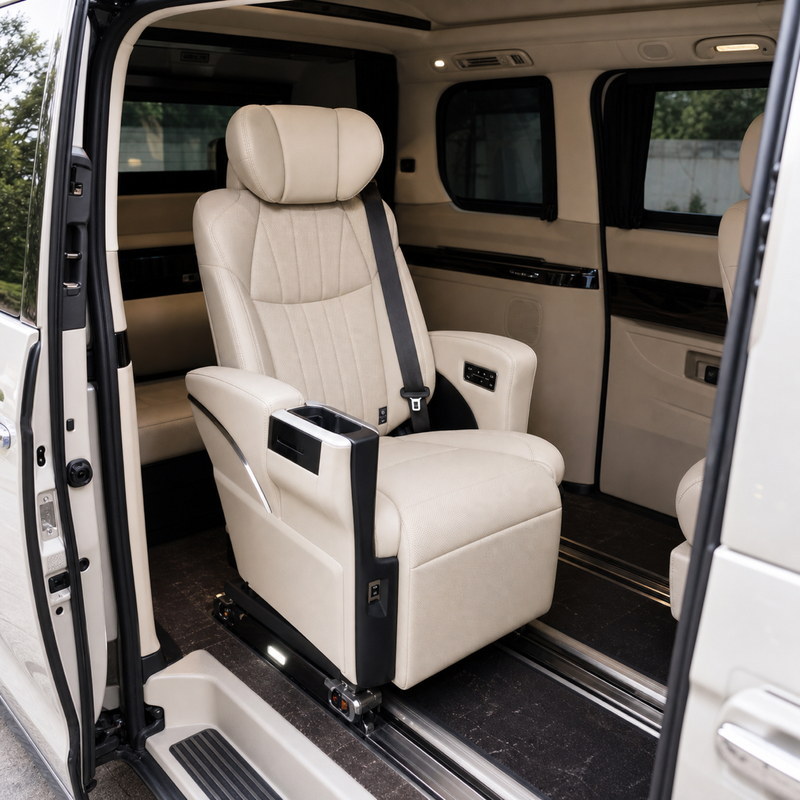
Multi‑function adjustment: electric leg rest, wide backrest tilt, seat rotation (up to 180°/360°) and sliding for flexible cabin layouts
Premium upholstery options: Nappa leather, top‑grain cowhide or high‑grade microfiber leather
All‑season comfort: built‑in heating, ventilation and massage
Safety‑first structure: reinforced seat frame with reserved airbag positions
Brand‑level finish: precise stitching and clean edge work that match or exceed factory quality
3. Who Benefits Most
MPV / V-Class modification shops: increase order value and attract repeat clients
Business fleet operators: improve passenger satisfaction and vehicle resale value
Private owners: enjoy VIP‑level comfort for family and business use
Car rental / chauffeur services: differentiate their fleet in a competitive market
4. Cost vs. Long‑Term Value
Custom seats cost more than seat covers, but the value is long‑term:
Higher comfort reduces driver/passenger fatigue on frequent routes
Premium interior significantly raises vehicle resale value
For modification shops, higher‑ticket orders mean better profit margins
5. Before You Order — Quick Checklist
Confirm vehicle model, year and seat structure (e.g. 2‑seat vs. 3‑seat bench)
List required functions: rotation, leg rest, massage, heating, ventilation
Choose material and color scheme that match your interior
Verify supplier’s safety certification and warranty policy
Ask about production lead time and installation service
Frequently Asked Questions (FAQ)
Will custom seats affect the side airbags?
A: No. Quality suppliers reserve precise airbag positions so collision safety is maintained.
How long does installation take?
A: Typically 1–2 working days depending on functions and vehicle model.
Do custom seats keep the original seat functions?
A: Yes, memory, adjustment and heating functions are retained with pre‑reserved wiring and cutouts.
Conclusion
Investing in custom aviation‑style seats is not only an interior modification, but an investment in riding experience and commercial value. Clarify your functional demands and material requirements before placing orders, to get the perfect custom seats for your MPV.
CTA: Ready to upgrade your MPV interior? Contact us with your vehicle model for a custom quote.
The Ultimate Guide to MPV Business Seat Upgrades: Transform Your Ride
For most MPV owners, factory‑installed seats are often the biggest compromise of the vehicle. Built with cost‑cutting in mind, stock seats typically come with firm padding, narrow backrests, limited adjustability and low‑grade upholstery. Whether you use your MPV for daily family transport, long‑distance road trips or frequent business hospitality, these factory seats quickly lead to body fatigue, lower‑back soreness and a sub‑par riding experience. Upgrading to premium business seats is no longer a luxury modification; it is a practical upgrade that transforms passenger comfort inside your MPV. This guide walks you through material selection and feature planning for MPV business seat upgrades, helping you leave behind the discomfort of original factory seats.
Why Factory MPV Seats Feel Uncomfortable and Outdated
Most OEM MPV seats only satisfy basic seating requirements, with little attention paid to ergonomics or long‑haul comfort. Stock upholstery is usually made of budget synthetic leather or fabric, prone to wear, peeling and aging over time. They get hot and sticky in summer and feel cold and rigid in winter, offering poor thermal comfort.
Internally, factory seat foam is thin and compact, lacking adequate support for the lumbar spine, neck and thighs. After just one hour on the road, passengers commonly experience back ache and leg numbness. Adjustment options are very limited, mostly offering simple slide and recline settings without electric controls, ventilation or heating — far below the standard expected for business or long‑distance travel.
Beyond comfort shortcomings, factory seats lack premium styling. Plain surfaces, basic stitching and generic styling make the cabin feel plain, failing to match the upscale vibe of a business‑oriented MPV and dragging down your interior impression for client receptions.
Core Material Selection: Balance Texture, Durability and Comfort
Materials form the foundation of any business seat upgrade, directly influencing touch, aesthetics, service life and day‑to‑day comfort. Each material carries distinct pros, cons and price points, so you can choose based on your use cases and budget.
1. Nappa Leather — Top Pick for High‑End Business Use
Nappa leather remains the gold‑standard upholstery for premium MPV business seats. Made from fine‑grain top‑grain cowhide, it delivers a silky‑soft touch and flexible feel. Compared with ordinary leather, genuine Nappa offers superior breathability, staying cooler in summer and less chilly in winter, fixing major pain points of OEM leather seats.
2. Microfiber Leather — Cost‑Effective for Daily Use
Microfiber leather outperforms factory synthetic leather in tensile strength, resisting cracking and permanent deformation under long‑term pressure. While breathability and softness sit slightly below Nappa leather, it fully meets comfort needs for family trips and regular business use, delivering great value for money.
3. High‑Density Foam Padding — Fix the Hard‑Seat Problem
Many shoppers focus only on surface upholstery while overlooking internal foam — this is the main reason factory seats feel uncomfortably hard. Premium aftermarket business seats use high‑elasticity high‑density rebound foam. Thick and well‑cushioned, it distributes body weight evenly across hips, thighs and lumbar area to reduce pressure points during extended rides.
Practical Feature Matching: Build Seats Around Your Riding Habits
Better materials improve baseline comfort, yet built‑in features define the real passenger experience. When planning your MPV seat upgrade, avoid over‑specifying unnecessary functions. Select features aligned with how you actually use the vehicle.
1. Multi‑Way Power Adjustment
Clunky manual controls with limited angles are typical of factory seats. Upgrading to 8‑way or 12‑way electric adjustment allows fine‑tuning of forward/backward travel, height, backrest angle, leg support and lumbar support. Passengers of different heights and body types can dial in their ideal seating position effortlessly, adding a premium user experience.
2. Seat Ventilation & Heating — Year‑Round Comfort
These two functions deliver the most real‑world benefit for most regions. Seat ventilation boosts air circulation across the seat surface to stop sweaty backs and thighs in hot weather. Seat heating quickly warms upholstery on cold days, eliminating icy‑cold seat surfaces for comfortable rides all year round.
3. Multifunctional Armrest with Wireless Charging
Built for business users, integrated multifunctional armrests often include wireless charging pads, USB‑C ports and storage compartments. Passengers can charge devices on‑the‑go and store phones, cups and documents neatly, making business travel much more convenient.
4. Power Leg Rest & Large‑Angle Recline for Long Trips
For frequent long‑distance travelers, power leg rests together with 160°+ recline are worthwhile additions. Deploy the leg rest for calf support while reclining the backrest to create a semi‑reclined resting position, helping passengers rest and relieve fatigue during road journeys.
Key Upgrade Tips: Avoid Poor Modification Choices
Many MPV owners fall into the trap of chasing top‑tier materials and every available feature, leading to bloated budgets and unused functions. A smarter approach is scenario‑driven selection:
Business‑focused vehicles: Nappa leather + full feature set for premium hospitality
Family‑oriented MPVs: Microfiber leather + core electric adjust, ventilation & heating to balance comfort and budget
Always confirm aftermarket seats offer solid vehicle‑specific fitment. Professional installation is critical to avoid tampering with OEM wiring or chassis structure, which can create safety risks and cause issues with vehicle inspections.
Final Thoughts
MPV business seat upgrades are all about elevating passenger experience, replacing under‑performing OEM components with quality materials and human‑centered features. Pick suitable upholstery to boost texture and durability, and match practical features to your travel scenarios. You can completely move past the discomfort of factory seats, turning every business trip and family road trip into a comfortable, premium experience and bringing substantial improvement to your MPV’s interior quality.
Introduction
For most pickup truck owners, factory‑original seats are built to meet basic driving needs, but they rarely balance long‑haul comfort, off‑road support and personalized adjustment. Whether you spend hours on highway commutes, frequently head out for off‑road adventures, or hope to refresh your pickup interior, aftermarket custom electric seats have become a popular upgrade choice among global pickup enthusiasts. This article breaks down the core benefits of switching to custom electric seats, key points for model matching, and practical advice before placing your order.
Factory Pickup Seats: Where Do They Fall Short?
Stock seats on mass‑produced pickups prioritize cost control and durability. In many cases, manual adjustment limits your ability to fine‑tune positions. Foam padding tends to turn flat after years of heavy use. During long‑distance driving, insufficient lumbar support easily triggers lower‑back soreness. When driving off‑road, weak side bolsters fail to hold your torso firmly through sharp corners and bumpy sections. Cold winter mornings also bring chilly seat surfaces without built‑in heating functions. All these small pain points gradually ruin your driving experience.
Major Advantages of Custom Electric Pickup Seats
1. Multi‑Way Electric Adjustment for All Body Types
Custom electric seats support multiple electric adjustments: slide forward and backward, backrest tilt, cushion height adjustment, plus electric lumbar support. Drivers with different heights and body builds can quickly lock in a suitable driving posture with one‑touch control, avoiding the awkward fixed positions of manual seats.
2. Optional Heating, Ventilation and Massage for All‑Season Comfort
High‑end custom seats integrate heating, ventilation and multi‑intensity massage modes. Heating dispels cold in winter; ventilation reduces sweating and stickiness in hot summer. Multi‑mode massage relieves muscle stiffness after hours of driving. Whether you are on cross‑country highway trips or rugged off‑road trails, you get spa‑level comfort inside the cabin.
3. Reinforced Structure Optimized for Off‑Road Scenarios
Different from ordinary passenger‑car seats, pickup‑oriented custom seats adopt reinforced side bolsters and high‑density resilient foam. When cornering or crossing rough terrain, solid side bolsters hold your body stable, reducing body sway. Heavy‑duty internal structures stand up to frequent bumpy off‑road conditions.
4. Vehicle‑Specific Mounting, Minimal Modification Work
Quality aftermarket custom seats are developed for specific pickup models such as Hilux, Navara, Ranger, Isuzu D‑Max. Mounting bases align with original factory mounting points. In most scenarios, destructive cutting or large‑scale drilling is unnecessary. Direct replacement greatly lowers installation difficulty for interior refits.
5. Elevate Interior Grade & Resale Value
Premium surface materials, neat stitching and streamlined seat shapes instantly upgrade your pickup cabin look. Apart from improving daily usability, well‑finished custom seats can also raise the interior appeal when you resell your pickup.
Important Things to Know Before Buying Custom Electric Seats
Confirm vehicle specification: Distinguish global‑spec and North‑American variants of the same pickup model. Mounting points and cabin space may differ, double‑check your vehicle version before ordering.
Choose professional installation: Electric seats involve wiring work. Professional auto interior technicians are recommended for installation to avoid wiring faults.
Clarify included functions: Confirm whether heating, ventilation, massage are included in your selected unit, some features are optional upgrades.
Understand warranty terms: Core electric components such as motors and harnesses normally come with limited warranty, while wear from daily use is not covered.
Conclusion
Pickup trucks are built for travel, exploration and heavy‑duty use. Your seat is where you spend every mile of the journey. Custom electric seats are more than cosmetic modification; they solve real‑world pain points for pickup drivers. If you often feel fatigued behind the wheel, upgrading to well‑fitted custom electric seats is one of the most cost‑effective interior improvements you can make for your pickup.
Introduction
With the rising demand for in-car office, travel entertainment and family travel, car desk boards have become one of the most practical and cost-effective interior accessories. Different from traditional car decorations, a qualified car desk board is not only a simple storage and desktop tool, but also can optimize the in-car space, improve travel comfort, and meet diverse scenarios such as mobile office, tablet viewing, food placement and child study. This article will sort out the core buying points of car desk boards from material selection, practical functions and standardized installation and modification, helping car owners quickly select safe, durable and highly compatible products.
1. Core Material Selection: Determine Durability and Safety
The material is the foundation of the car desk board's service life, load-bearing capacity and driving safety. Common materials on the market include aluminum alloy and carbon fiber composite materials. Each material has obvious differences in hardness, wear resistance, weight and applicable scenarios.
1.1 Aluminum Alloy (High Load-Bearing & Durable)
Aluminum alloy is the preferred material for high-strength use scenarios. It has ultra-high hardness, strong load-bearing capacity, wear resistance and corrosion resistance, not easy to bend or damage. The lightweight metal structure will not increase the burden of car parts. It is very suitable for users who often work in the car, place laptops and large equipment, or travel long distances. Most high-end foldable desk boards adopt aluminum alloy frame structure for double stability and safety.
1.2 Carbon Fiber Composite (Sports & Lightweight)
Carbon fiber composite board integrates lightweight and high strength, with stereoscopic racing texture and fashionable appearance. It has strong pressure resistance, no deformation, ultra-thin design, and does not occupy interior space. It is the best choice for sports cars and modified vehicles pursuing personalized style. The price is relatively high, suitable for users who pursue both appearance and performance.
2. Practical Core Functions: Improve In-Car Experience
Excellent car desk boards are not limited to simple placement functions. Rich humanized designs can solve various pain points of in-car use. When purchasing, you can focus on folding storage, angle adjustment, multi-functional expansion and other practical configurations to meet different travel needs.
2.1 Folding & Adjustable Design
Integrated folding design is the standard configuration of high-quality desk boards. It can be folded and stored when not in use, will not block leg space, and does not affect normal riding. Stepless angle adjustment can switch freely between horizontal placement and inclined viewing, adapting to laptop office, tablet video watching, book reading and other scenarios, effectively relieving neck and shoulder fatigue.
2.2 Multi-Functional Expansion Configuration
Water Cup & Phone Holder: Built-in reserved slots for water cups, mobile phones and tablets, effectively preventing items from sliding and falling during driving bumps, keeping the desktop tidy.
Anti-Slip Desktop & Baffle: The desktop is designed with anti-slip texture and anti-fall baffles, which can firmly fix laptops and tableware to avoid sliding and shaking.
Silicone Cushion Protection: The contact part with the seat is equipped with silent silicone cushion, which avoids scratching the original car leather and eliminates abnormal noise during vibration.
2.3 Safe Load-Bearing & Stable Structure
Formal qualified car desk boards adopt reinforced bracket structure, with uniform stress and strong stability. It can stably bear laptops, books, meals and other daily items. It will not shake or tilt during acceleration, deceleration and turning, ensuring safe use in the car.
3. Modification & Installation Guidelines: Standard & Safe
Car desk board belongs to simple interior accessory modification. Correct installation and use are the key to avoid hidden dangers. Many car owners ignore installation specifications, resulting in loose accessories, abnormal noise or even potential safety hazards.
3.1 Pre-Purchase Adaptation Check
Before purchasing, confirm the seat headrest structure and rear space size of the vehicle. Most desk boards are suitable for conventional models with detachable headrest poles. Avoid universal products with poor fit, which are easy to shake and affect the use experience. For special-shaped seats and new energy exclusive models, it is recommended to select special customized desk boards.
3.2 Standard Installation Specifications
The installation is simple and does not require drilling or damage to the original car. Fix the bracket firmly on the headrest pole, adjust the tightness to avoid looseness, and ensure the desk board is horizontally balanced. After installation, shake slightly to check the stability, and adjust the angle and height according to the riding height to ensure comfortable use.
3.3 Safety Use Taboos
Do not place overweight items for a long time to avoid bracket deformation; do not use the desk board when driving sharply or braking urgently; fold and store the desk board in time when not in use to avoid occupying space and affecting passenger safety. It is forbidden to install modified desk boards that block the rear sight and affect driving safety.
4. Buying Suggestions & Summary
For daily family use with low budget, choose lightweight and cost-effective ABS plastic desk boards; for business cars and users pursuing interior texture, high-density wood grain board is the best choice; for long-term in-car office and high-frequency use, prioritize aluminum alloy reinforced desk boards with strong load-bearing capacity; for modified and sports models, select carbon fiber personalized styles. On the premise of ensuring safe installation and stable structure, match functions according to personal usage habits, which can maximize the utilization rate of in-car space and upgrade travel comfort.
Conclusion
A practical car desk board is a small but high-value interior upgrade. It breaks the single riding function of the rear row, turns the car into a mobile office and leisure space, and brings great convenience to family travel, business reception and daily commuting. Scientific material selection, reasonable function matching and standardized installation are the core of avoiding pitfalls. Choosing a compliant and suitable car desk board can easily realize the dual improvement of vehicle practicability and comfort.
Introduction
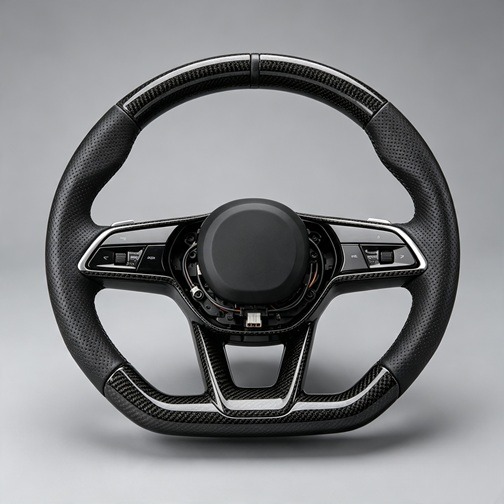
With the continuous upgrading of automotive interior modification trends, more vehicle owners and modification enthusiasts are abandoning factory stock steering wheels. Custom steering wheels have become one of the most popular interior upgrade items, perfectly integrating personalized appearance, comfortable hand feel, and practical functional upgrades. Whether for daily family cars, business VIP vehicles, or sport modified models, a customized steering wheel can instantly upgrade the overall cabin grade and driving experience.
However, the custom steering wheel market features diverse materials, optional heating functions, and complicated modification processes. Many buyers struggle to distinguish product quality, match suitable configurations, and avoid modification risks. This complete buying guide focuses on core selection points including mainstream materials, heated steering wheel functions, and standard modification specifications, helping you make a safe, cost-effective, and high-quality customization choice.
1. Mainstream Materials of Custom Steering Wheels: Pros and Application Scenarios
Material determines the steering wheel’s hand feel, wear resistance, appearance texture, and service life. Different materials suit different user needs, from business luxury style to sport racing style.
1.1 Carbon Fiber Material
Carbon fiber steering wheels are the first choice for sport modification and high-end vehicle upgrades. Featuring lightweight properties, high hardness, scratch resistance, and unique 3D woven texture, they deliver an aggressive racing visual effect. Compared with traditional plastic and leather wheels, genuine carbon fiber panels are more durable, not easy to deform or fade, and maintain a brand-new appearance for long-term use.
It is widely suitable for sports cars, performance vehicles, and modified models pursuing personalized sport interiors.
1.2 Nappa / Genuine Leather Material
Genuine leather and Nappa leather steering wheels focus on comfort and luxury texture. The surface is delicate, soft, and skin-friendly, providing a non-slip stable grip during long-distance driving. High-quality leather materials feature great ductility, wear resistance, and no peculiar odor, effectively avoiding sweating and slipping in summer and cold freezing touch in winter.
This material is the best match for business VIP cars, family vehicles, and high-end executive cars.
1.3 Carbon Fiber + Leather Hybrid Material
The hybrid design combines the sporty sense of carbon fiber and the comfortable hand feel of leather. It balances personalized fashion and daily practicality, becoming the most popular customized solution in the current market. It supports diverse stitching colors, perforated leather design for enhanced ventilation and anti-slip performance.
2. Heated Steering Wheel Function: Value, Adaptation and User Benefits
Heating function is one of the most practical functional upgrades for custom steering wheels, solving the core pain point of cold steering wheels in low-temperature environments. Many stock factory wheels lack heating configuration, which greatly reduces driving comfort in winter.
2.1 Core Advantages of Heating Function
Custom heated steering wheels adopt uniform internal heating wire layout, achieving fast and overall heating without local overheating. Constant-temperature heating keeps the grip warm and comfortable in cold weather, effectively relieving hand stiffness and fatigue during long drives. Meanwhile, the heating module is built-in and hidden, which does not affect the original hand feel and overall appearance of the steering wheel.
2.2 Applicable Crowds and Scenarios
The heating upgrade is highly recommended for users in cold regions, long-distance drivers, and business vehicle users. It greatly improves winter driving safety and comfort, and significantly enhances the vehicle’s high-end configuration sense.
2.3 Selection Tips
When purchasing heated steering wheels, avoid low-cost modified heating modules with uneven heating and poor safety. Choose professional integrated heating steering wheels with stable temperature control, waterproof and safe circuits, and long service life.
3. Custom Steering Wheel Modification Standards and Key Points
Modification technology and installation standards directly determine the steering wheel’s stability, safety and service life. High-end customization focuses on original car matching, zero-damage installation and safe driving performance.
3.1 Original Car Data Customization
Premium custom steering wheels are developed based on original car data, ensuring perfect matching with original car buttons, airbags, wiring harness and installation positions. No cutting, no drilling, no damage to original car parts, fully compatible with original car functions such as cruise control and multimedia control.
3.2 Modification Safety Standards
Steering wheels are core safety components of vehicles. Qualified modified steering wheels must pass structural stability testing, ensuring firm installation without shaking or deviation during high-speed driving and bumpy road conditions. The internal skeleton adopts high-strength structure to avoid deformation and failure, protecting driving safety.
3.3 Personalized Customization Options
Professional manufacturers support full personalized customization, including custom LOGO embossing, colorful stitching, perforated anti-slip design, racing indicator, and multi-color surface matching. Buyers can adjust styles and functions according to vehicle models and personal preferences.
4. Common Purchasing Mistakes to Avoid
Only focusing on low price: Low-cost steering wheels often use fake carbon fiber, recycled leather, and unstable heating modules, which are prone to fading, peeling, uneven heating and even hidden safety hazards.
Blindly pursuing multiple functions: Unnecessary stacked functions will increase costs and even affect the original car circuit system. Match functions reasonably according to regional climate and usage habits.
Ignoring installation compatibility: Non-standard modification will lead to loose buttons, abnormal wiring and function failure, seriously affecting driving experience and safety.
Conclusion
A high-quality custom steering wheel balances premium material texture, practical heating functions and safe modification technology. When purchasing, users should select reasonable materials (carbon fiber, leather or hybrid styles) according to modification positioning, choose heating functions based on actual usage scenarios, and prioritize regular manufacturer customization and standard installation.
Whether for personal car interior upgrading or auto parts wholesale business, standardized custom steering wheel modification can effectively improve vehicle grade, driving comfort and personalized recognition, helping you create a unique high-end car interior experience.
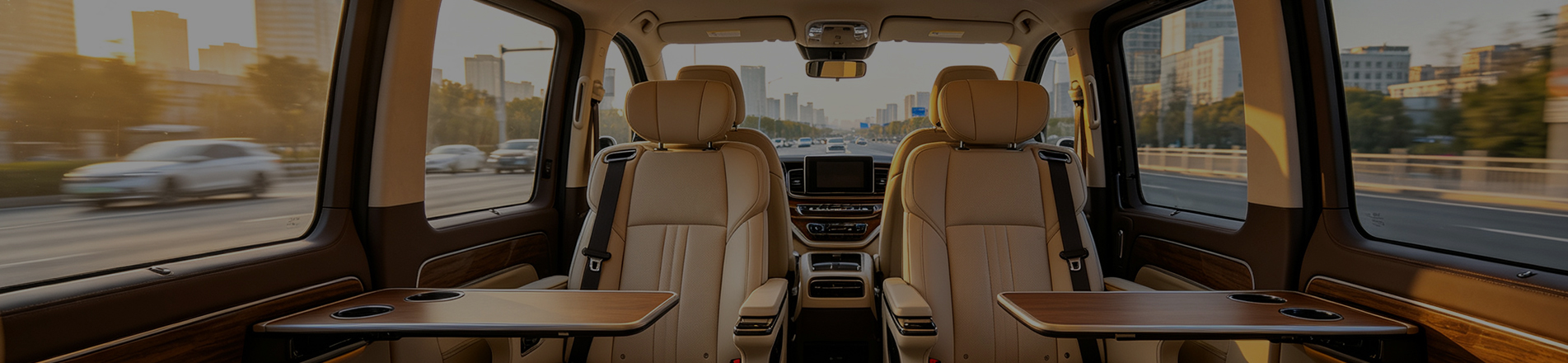
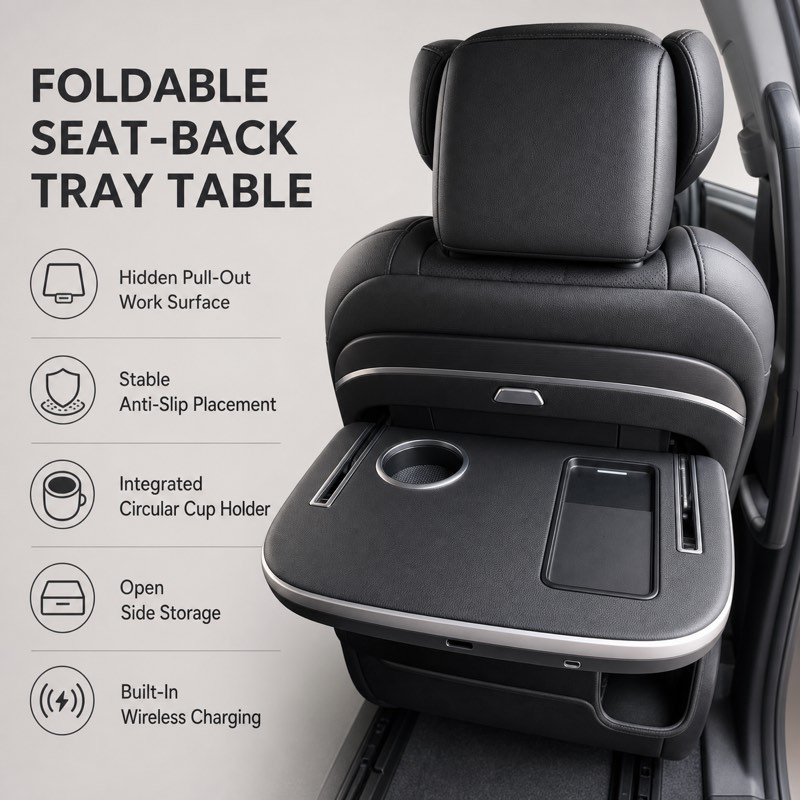
In recent years, demand for foldable car backseat tray tables has grown rapidly alongside booming luxury MPV refitting, VIP aviation seat upgrades and high-end automotive interior modification markets.
A high-quality backseat tray table greatly improves passenger convenience, elevates the luxurious atmosphere inside the cabin, and delivers first-class travel experience for business commuters, family passengers and VIP clients.
However, a wide range of tray tables with different structures, materials and functions flood the market. It can be confusing to pick a suitable car backseat tray table that meets practical needs.
This guide outlines all key factors you need to evaluate when selecting VIP foldable tray tables, rear seat desk panels and custom automotive interior tables.
1. Clarify Usage Scenarios Before Purchasing Car Backseat Tray Tables
The first principle of selection is confirming where and how the tray table will be used.
Luxury VIP Reception Vehicles
For corporate executive cars, VIP transfer vehicles and high-end commercial MPVs, stable performance and premium visual matching rank highest. Recommended features:
Seamless folding design;
Reinforced load-bearing bracket;
Integrated cup holder reserved area;
Waterproof and stain-resistant panel;
Harmonious matching with aviation captain seats;
Silent folding hinges. These configurations are widely adopted on luxury MPVs, business vans and customized VIP transport vehicles.
Family Long-distance Travel Vehicles
For users who often drive long distances, safety and ease of daily maintenance are more important than appearance only. A practical backseat tray table should offer:
Rounded anti-collision edge treatment;
Simple one-hand folding operation;
Smooth easy-to-wipe surface;
Stable structure without shaking during driving;
Space-saving storage when not in use. Humanized details effectively reduce inconvenience during family road trips.
Automotive Interior Modification Projects
Numerous vehicle owners upgrade original interiors by installing rear seat tray tables. Common application scenarios:
Second-row supporting facilities for modified MPVs;
Luxury van interior renovation;
RV and camper interior upgrades;
Custom VIP passenger cabin transformation. When ordering customized tray tables, buyers must verify seat compatibility, installation limits and overall interior coordination.
2. Select Premium Materials for Longer Service Life & Better Texture
Material quality directly decides appearance, using experience and durability of car tray tables.
Aluminum Alloy Bracket Structure
High-grade foldable tray tables generally adopt aluminum alloy support frames. Advantages:
Lightweight yet high strength;
Strong anti-deformation capacity;
Stable load-bearing performance;
Rust-resistant for long-term vehicle use. High-quality brackets maintain structural tightness after repeated opening and closing.
Table Panel Materials
Multiple panel options are available for different positioning:
Carbon fiber panel: sporty texture, scratch-resistant, popular for high-end refitting;
Luxury wood grain panel: matches aviation interior, outstanding premium sense;
High-density environmental board: cost-effective, stable shape, widely used in wholesale orders. Qualified panels feature waterproof coating to prevent damage from spilled drinks.
Internal Folding Hinges
Hinges determine the smoothness of folding movement. Excellent tray tables are equipped with:
High-strength silent hinges;
Wear-resistant rotating structure;
Locking design to fix opening angles;
No abnormal noise during frequent folding.
3. Core Functional Highlights of High-end VIP Tray Tables
Modern automotive rear tray tables come with abundant practical functions. Buyers should select configurations based on target market demands.
Foldable Space-saving Mechanism
The foldable design is the fundamental feature of backseat tables. Core advantages:
Flush folding without protruding;
Will not occupy rear passenger legroom;
Preserve the original elegant interior layout;
Simple operation for quick unfolding and storage.
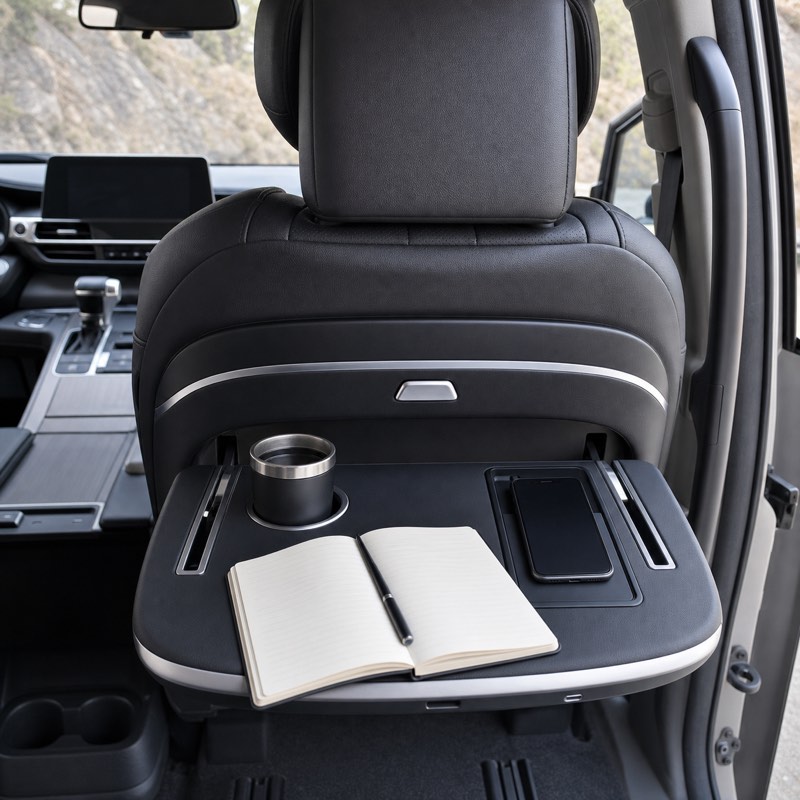
Multifunctional Reserved Layout
Well-designed tray boards reserve dedicated zones to enrich usage scenarios:
Independent cup slot to prevent cup sliding;
Notebook placement area;
Small storage groove for mobile phones and accessories. Suitable for in-car office, casual dining and entertainment.
Waterproof & Easy-clean Surface
This function brings huge convenience for daily use. Premium surface treatment features:
Anti-stain coating;
Liquid-proof performance;
Oil stains and beverage spills wiped off effortlessly;
Keep the table tidy with minimum maintenance.
Anti-shake Stable Load-bearing
A must-have feature for safe driving use. Qualified products can steadily hold laptops, meals and water cups during vehicle operation. Reinforced supporting structure avoids shaking and sliding on bumpy roads.
4. Safety Standards You Cannot Ignore
While convenience matters, safety is the non-negotiable priority. Reliable tray table manufacturers strictly control safety details:
Fully rounded edges to avoid passenger bumps and scratches;
Firm locking structure preventing accidental sudden folding;
Environmentally friendly raw materials, low odor;
Stable connection that will not fall off while driving.
Before bulk purchasing, confirm whether products undergo strict structural testing to adapt to complex road conditions.
5. Confirm Compatibility and Installation Requirements Before Ordering
Prior to placing orders for customized tray tables, check the following information:
Applicable vehicle models and seat types;
Seat back thickness and mounting space;
Limit of unfolding distance;
Non-destructive installation allowance;
Whether drilling modification is required. Accurate size matching ensures convenient installation and perfect visual fitting.
6. Benefits of Cooperating with Professional Tray Table Manufacturers
Partnering with experienced manufacturers brings obvious competitive advantages:
Customization Support
Professional suppliers can offer flexible customization:
Multiple panel surface textures and colors;
Size adjustment for different captain seats;
Custom logo engraving or embroidery;
Function combination adjustment;
Model exclusive fitting development.
Stable Quality Control
Trustworthy factories own:
Standardized assembly production lines;
Strict raw material screening;
Finished product stability testing;
Consistent quality for bulk wholesale orders.
Complete After-sales Service
Reliable suppliers provide long-term support:
Clear installation instructions;
Online technical guidance;
Supply of replacement hinge and spare parts;
Sustainable bulk cooperation solutions.
7. Typical Pitfalls When Purchasing Car Backseat Tray Tables
Simply Choosing Products with Ultra-low Prices
Cheap tray tables usually have hidden defects:
Thin, fragile brackets prone to deformation;
Low-grade panels susceptible to bubbling and peeling;
Loose hinges that easily produce rattling noise;
Poor stability when bearing weight.
Blindly Pursuing Excessive Functions
More accessories do not equal higher market value. Match functions according to your customer groups to control costs.
Neglecting Installation Matching
Even well-made tray tables cannot deliver good experience if the size fails to match seat backs. Always confirm compatibility in advance.
Conclusion: Select Suitable Backseat Tray Tables to Upgrade VIP Riding Experience
Choosing qualified car backseat tray tables requires comprehensive evaluation of: Structural stability, safety performance, material grade, practical functions, seat compatibility and supplier strength.
No matter if you supply accessories for MPV refitting shops, operate VIP vehicle modification projects or purchase products for wholesale distribution, cooperating with a professional tray table manufacturer helps you provide passengers with safer, more convenient and high-grade interior experience.
A premium foldable backseat tray table is far more than an automotive interior accessory. It adds value to vehicle refitting, improves user satisfaction and helps you win greater market advantages.
In today’s automotive industry, drivers are looking for more than just reliable performance. Comfort, convenience, and personalized driving experiences have become important factors when choosing and upgrading vehicles. Among various automotive interior features, a heated steering wheel has become an increasingly popular option, especially for luxury vehicles, SUVs, MPVs, and vehicles used in cold climates.
A heated steering wheel not only provides a warmer and more comfortable driving experience but also improves driving safety and adds a premium touch to the vehicle interior.
What Is a Heated Steering Wheel?
A heated steering wheel is an advanced automotive comfort feature that uses built-in heating elements inside the steering wheel to generate warmth.
When activated, the heating system quickly transfers heat to the steering wheel surface, allowing drivers to enjoy a comfortable grip even in cold weather conditions.
The system typically consists of:
Integrated heating elements;
Temperature control module;
Electrical connection system;
Heat-resistant steering wheel materials.
This technology is commonly found in premium vehicles and is also available as an aftermarket upgrade solution.
Benefits of a Heated Steering Wheel
Improved Comfort in Cold Weather
One of the biggest advantages of a heated steering wheel is providing instant warmth during winter driving.
After a vehicle has been parked outdoors in cold temperatures, the steering wheel can become extremely uncomfortable to touch. A heated steering wheel helps drivers quickly warm their hands and enjoy a more pleasant driving experience.
It is especially beneficial for:
Cold climate regions;
Winter driving conditions;
Vehicles parked outdoors for long periods;
Early morning commuters.
Enhanced Driving Safety
A heated steering wheel is not only about comfort — it can also contribute to safer driving.
Cold temperatures may cause:
Reduced hand flexibility;
Uncomfortable grip;
Slower steering response.
By keeping hands warm and relaxed, drivers can maintain better control of the steering wheel and improve overall driving confidence.
Reduced Driving Fatigue
For drivers who spend many hours on the road, comfort becomes increasingly important.
A heated steering wheel can help:
Reduce discomfort caused by cold hands;
Maintain a relaxed grip;
Improve long-distance driving experiences.
This feature is especially valuable for business vehicles, executive transportation, and long-distance travel vehicles.
Adds Luxury and Premium Vehicle Appeal
Modern automotive design focuses heavily on creating a premium cabin experience. A heated steering wheel is now considered an important luxury feature, often combined with other high-end interior upgrades, such as:
Leather steering wheels;
Ventilated and heated seats;
Electric business seats;
Advanced driver assistance systems.
Together, these features create a more comfortable and sophisticated driving environment.
Night drives do not have to be dull and plain. Our car ambient lighting is an ideal interior modification to level up your vehicle cabin. With adjustable brightness and multiple color options, you can freely switch lighting styles to suit different moods and scenes.The soft light glow delivers more than just visual beauty. It eases eye fatigue when driving after dark and builds a cozy, welcoming atmosphere for drivers and passengers. Whether you are commuting alone or traveling with family and friends, the ambient lighting turns every trip into a pleasant journey.Crafted with reliable materials, our ambient lighting features simple installation and strong compatibility with most vehicle models. No complicated modification is required. It is one of the most cost-effective ways to add personality and modern aesthetics to your car interior.If you are looking for an affordable upgrade to refresh your car interior, our car ambient lighting will be your perfect choice.




 Get A Quote